
For years, I believed strength meant lifting heavier weights.
More plates. More reps. More resistance.
Like many people, I associated being “fit” with traditional gym training. Squats, dumbbells, deadlifts, and progressive overload. Since I already strength train twice a week, I assumed I had a strong foundation overall.
Then I tried reformer Pilates.
And honestly, it changed my perspective completely.
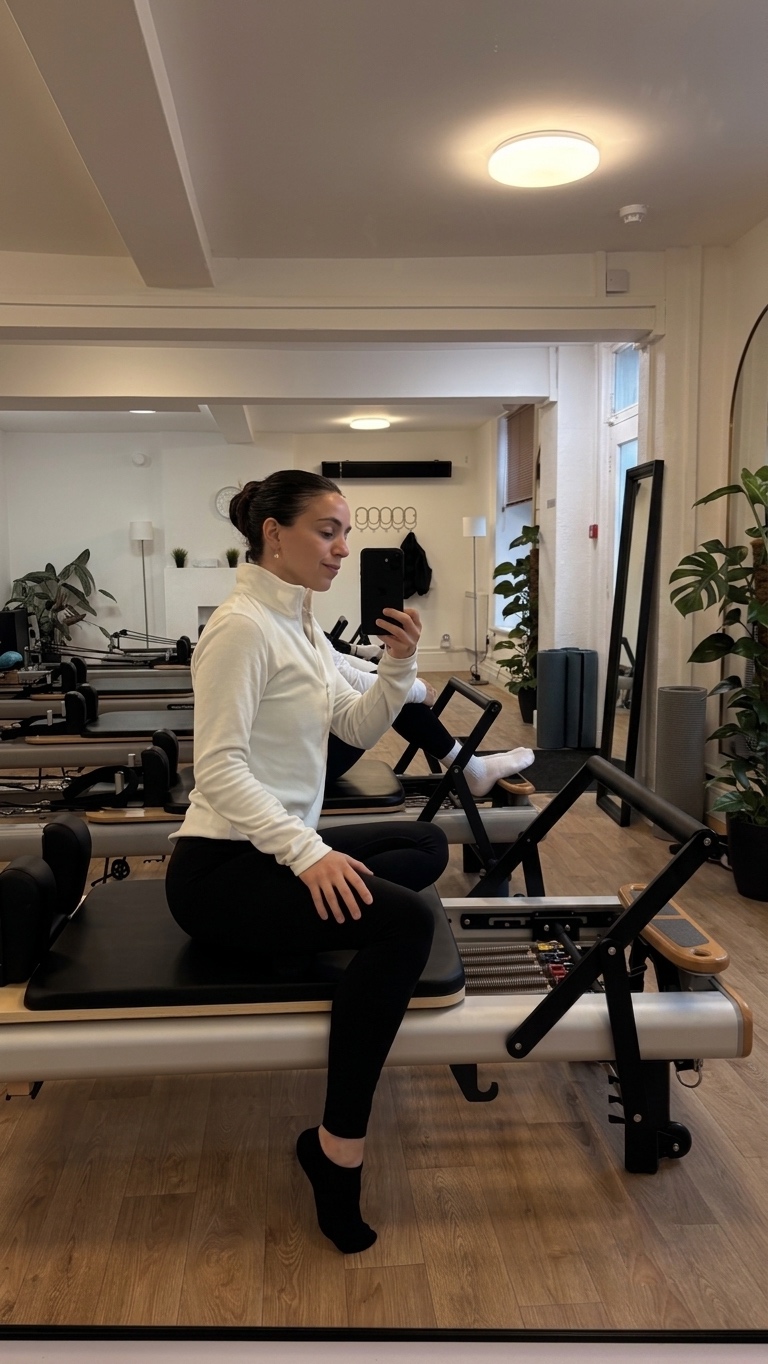
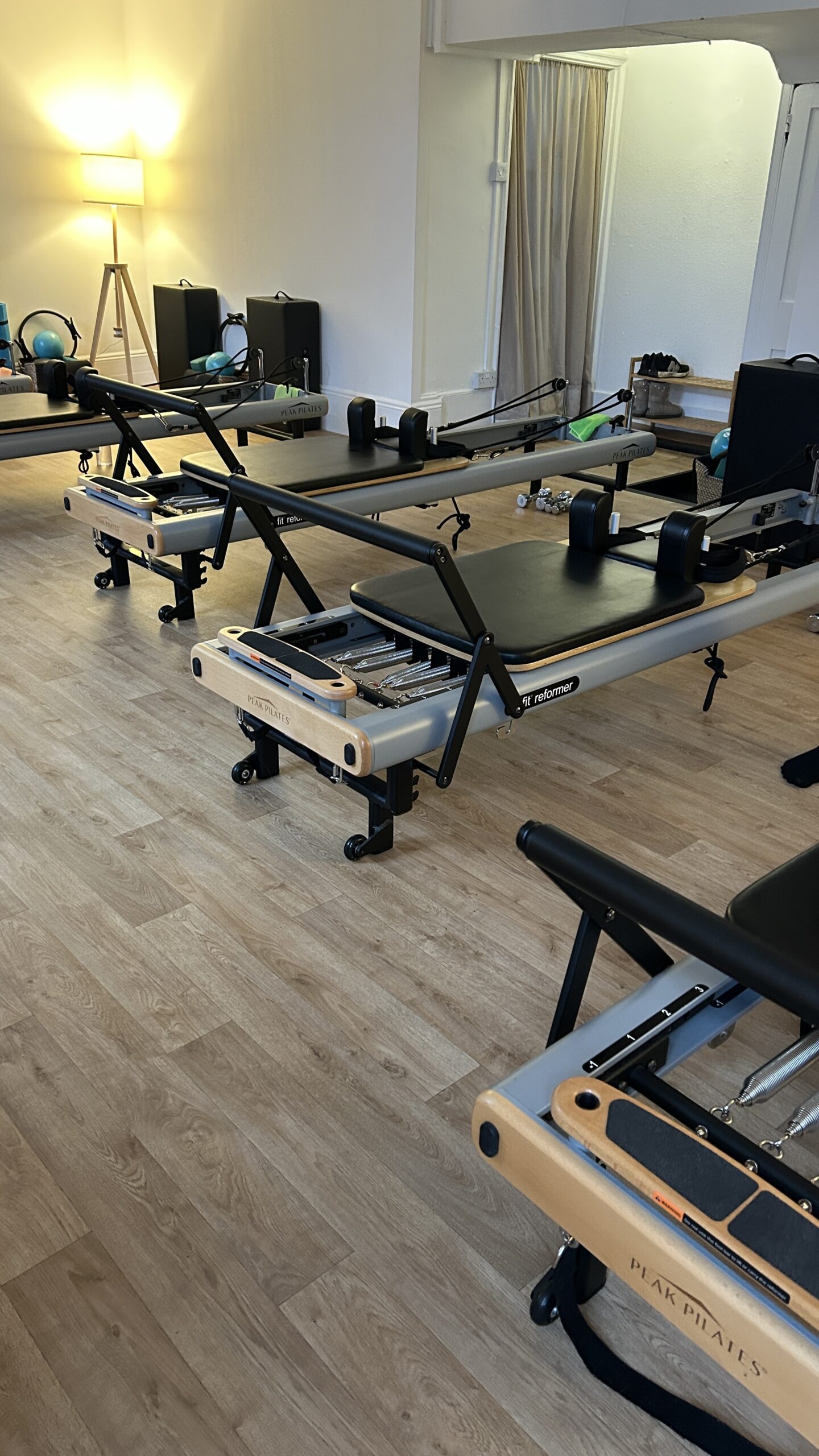
Recently, I attended a reformer Pilates session at the Reformer Pilates Club in Buckingham, one of the studio’s locations, and quickly realised that this style of training works the body in a completely different way.
So, What Is the Difference?
At first glance, both reformer Pilates and weight training involve resistance. However, the way they challenge the body is very different.
Weight Training Focuses on Power and Muscle Growth
Traditional strength training is designed to build muscle mass, endurance, and overall physical strength. Usually, the focus is on larger muscle groups like glutes, quads, hamstrings, chest, and shoulders.
Most strength gains come through progressive overload. In simple terms, that means gradually increasing the weight over time so the muscles continue adapting.
This style of training is excellent for:
- Building muscle
- Increasing power
- Improving endurance
- Developing overall body strength
And yes, it absolutely has its place.
However, reformer Pilates fills a gap that many gym routines miss.
Why Reformer Pilates Feels So Different
Reformer Pilates is less about force and more about control.
The reformer machine uses springs for resistance rather than heavy weights. Because the carriage moves underneath you, your body has to stabilise constantly throughout every exercise.
That means your core is engaged almost the entire session.
Not only the visible abdominal muscles, but also the deeper stabilising muscles that support posture, balance, and spinal alignment.
That was the biggest surprise for me.
Even though I lift weights regularly, reformer Pilates exposed muscles I clearly was not activating enough. Small stabilising muscles started shaking within minutes. Every movement required precision, focus, and balance.
You cannot rush through reformer Pilates. The machine forces control.
And that is where the magic happens.
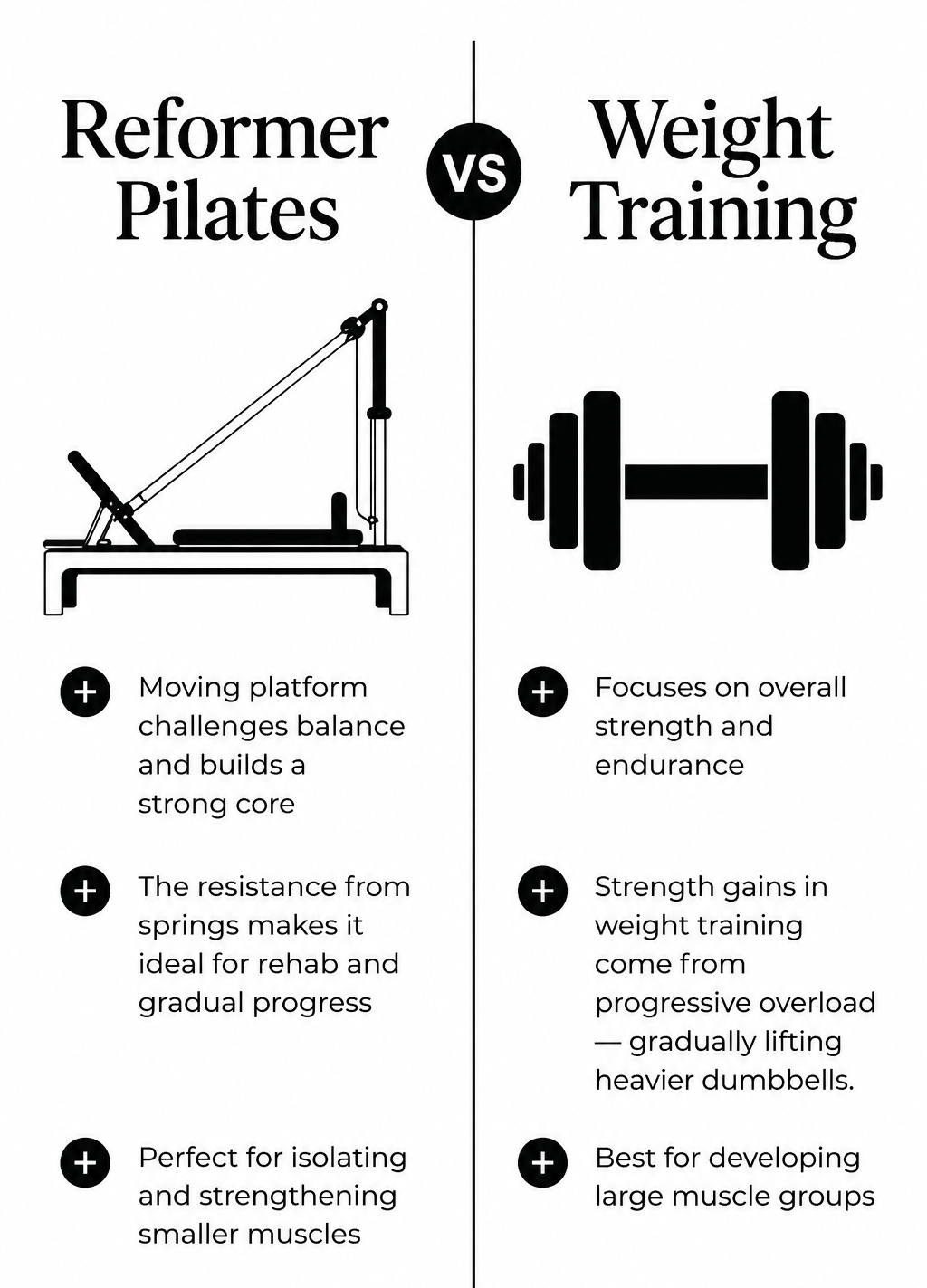
After one session, I immediately understood why so many people swear by it. Some of the biggest benefits include: In addition, reformer Pilates is often recommended for rehabilitation and injury prevention because the spring resistance can be adjusted gradually and safely. It is challenging without feeling aggressive on the body.
My Experience at The Reformer Pilates Club
When I first started reformer Pilates, I honestly did not know what to expect. At the time, I thought my strength training background would prepare me for it quite easily.
A month later, I can confidently say reformer Pilates has taught me so much about my body.
Not only physically, but mentally too.
Over the past month, I have started understanding how much control, stability, balance, and deep core engagement truly matter. Weight training gave me strength, but reformer Pilates introduced me to a completely different type of body awareness.
Now, I am no longer walking into classes feeling like a beginner. Instead, I walk in knowing I am still learning something new every single session.
That is what makes it so addictive.
Every class reveals something different. One week, I notice how much stronger my core feels. The next, I realise my posture has improved. Then suddenly, movements that felt impossible during my first sessions start feeling smoother and more controlled.
It has made me more aware of how my body moves as a whole.
Small adjustments completely change how an exercise feels, and that has been one of the biggest lessons for me throughout this journey.
The classes combine full-body movements with core activation, balance work, leg resistance, arm work, posture training, and controlled transitions using the springs and straps.
And although the movements can look graceful, they burn in ways I genuinely did not expect.
What I love most is that reformer Pilates and weight training do not compete with each other. They complement each other perfectly.
Weight training builds power and muscle. Reformer Pilates builds control, precision, stability, and mobility.
Together, they create a much stronger and more balanced body overall.
This past month has shown me that strength is not always about lifting heavier. Sometimes, it is about slowing down, controlling movement properly, and understanding how your body actually functions.
If you have been thinking about trying reformer Pilates, I genuinely recommend booking a class at The Reformer Pilates Club. Choose your studio in 3 different loactions around buckinghamshire!
Your body will thank you for it later.
————————–
The content provided in this article is provided for information purposes only and is not a substitute for professional advice and consultation, including professional medical advice and consultation; it is provided with the understanding that Uptown Style (“Uptown Style”) is not engaged in the provision or rendering of medical advice or services. You understand and agree that Uptown Style shall not be liable for any claim, loss, or damage arising out of the use of, or reliance upon any content or information in the article.
Make sure you check out similar articles like this one here.
